Objectives
This mission in Cameroon highlighted an emerging ecosystem of stakeholders committed to promoting eco-construction. While still limited in scale, the complementarity between urban development, rural initiatives, and vocational training offers strong potential for scaling up sustainable building practices.
The project is structured around three key pillars: the development of socio-ecological housing models in urban areas (ASSOAL), the integration of eco-construction into agroecological practices (FADER network), and the strengthening of vocational training programmes (Bamenda and Kumbo). Through technical support and stakeholder coordination, the initiative contributes to enhancing local building cultures and structuring a sector aligned with socio-economic and environmental challenges.
Results
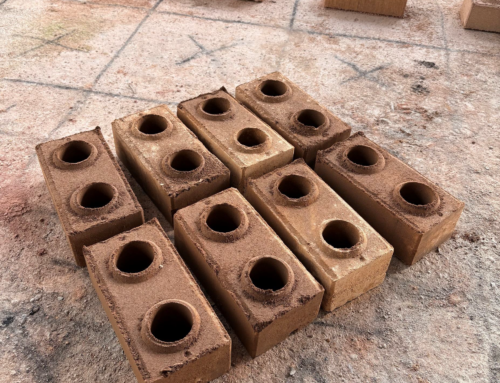
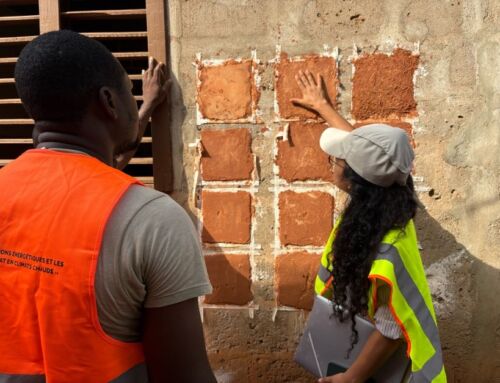
- Building local capacity by training 10 teachers from the Bamenda and Kumbo centres in earthen construction techniques.
- Evolving construction practices towards greater integration of local building traditions, moving beyond standardised solutions.
- Integration of green building into policies and strategies
Support for the integration of green building into Inades Formation’s long-term strategy (horizon 2040). - Capitalisation on and dissemination of regional experiences to facilitate exchanges between initiatives (Cameroon, DRC) and the replication of adapted solutions.
- Consolidation of a key local technical expertise hub (ACTerre) for training, support and improving project quality.
- Emergence of a multi-stakeholder dynamic in favour of green building, mobilising urban, rural and educational organisations around a shared vision.
Partners
Association ASSOAL, Réseau FADER, ACTerre, Collège technique de Bamenda, Centre de formation Kumbo
Funding
Misereor