Contexte
Since 2010, the Fondation pour le Logement des Défavorisés (FPL) and CRAterre have been working in partnership to help the most disadvantaged people gain access to decent housing. In June 2023, the FPL renewed its trust in CRAterre for a further three years. This gave rise to the ‘Networking to promote access to decent housing’ project, the aim of which is to support FPL's international partners in developing methods and tools to improve the response to people's access to decent housing.
The aim of this project is to support FPL's international partners in the development of methods and tools to improve people's access to decent housing. The project has 2 main focuses.
The first involves providing CRAterre's expertise to FPL's partner organisations that express a need for it.
The second involves coordinating the network of FPL partners in order to co-develop methods and tools relating to housing, associated with the themes of respect for production methods, gender and climate change.
Objectives
This mission formed part of the wider project jointly led by Habitat-Cité and the Efraín Guzmán Solidarity Economy Federation, an initiative aimed at strengthening the social fabric and actively contributing to the implementation of the Final Peace Agreement in Colombia through civilian reintegration and access to decent housing for the signatories to the peace agreement.
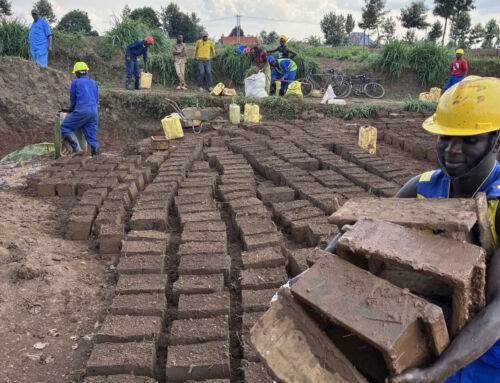
This productive and community-based initiative by an eco-friendly construction company arose from the needs of residents at the Jhon Bautista Peña ETCR in the municipality of Anorí for adequate housing and living conditions. Indeed, in the area where the ETCR project is being developed, temporary accommodation was still made of wood and plastic, in precarious conditions. In this regard, the contribution to the communities lay in the provision of eco-friendly building materials at a lower cost than conventional materials on the market, as well as in the reduction of transport costs thanks to the on-site manufacture of BTCs. Furthermore, this project was designed to act as a catalyst for boosting the community’s economy as a significant source of income, enabling the creation of direct jobs and the distribution of profits derived from the financial surpluses of the eco-friendly, community-based construction company.
To ensure the project’s development and sustainability, a substantial investment in infrastructure was envisaged, including, in particular, the construction of a 300 m² warehouse, toilet facilities and other technical areas. Similarly, social support and training in the management of the production project were recommended.
The main objective of this diagnostic phase was to support the development of COOMULDESNA’s eco-brick factory (BTCS) initiative, in the form of a work placement. Its main aim was to contribute to a comprehensive analysis of the brickworks in order to assess its technical, social, economic and cultural viability as a local production alternative for housing, and to support the group of participants in its potential reactivation, with a view to ensuring sustainability and replicability.
Results
Description of the community-led SCEB:
- Field observations,
- Collection of testimonies,
- Field trials
Mapping of stakeholders:
- Discussions and interviews with the community,
- Participatory diagnostic workshop (SWOT analysis),
- Various participatory actions (Participatory Action Research methodology)
Participatory and training activities:
- Workshop on raising awareness and understanding of soil
- Workshop on the formulation and production of SCEB
- Equipment inspection and maintenance
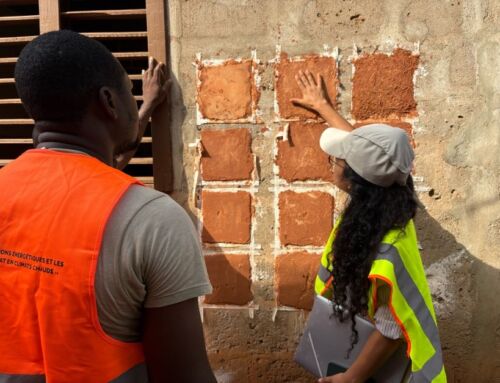
- Quality control workshop
SCEB laboratory analysis and testing
- Soil characterisation
- Design of SCEB mixtures
- Unit price analysis (UPA)
Partners
UrbaSEN, Grdr, Padem, Lumanti, CADECOM, CARD*
FUNDASA, Habitat-Cité
Financing
Fondation pour le Logement des Défavorisés