Objectives
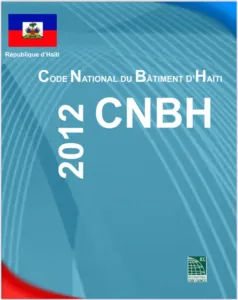
Following the earthquake of January 12, 2010, the Haitian National Building Code (CNBH) was revised in 2012 to incorporate seismic provisions. Unchanged since then, the Code underwent a major new revision in 2025 to address the current challenges of strengthening the resilience of Haiti’s built environment.
This revision aimed in particular to:
integrate cyclonic provisions, especially for roofs and anchoring systems, based on locally available and accessible solutions;
propose guidelines for the retrofitting of existing housing, taking into account both seismic and cyclonic loads;
better address common small-building typologies in Haiti, particularly timber-frame houses with stone masonry infill.
The project was funded by CDRI and carried out under the leadership of the Ministry of Public Works, Transport and Communications (MTPTC), with coordination by Build Change and validation by a national steering committee bringing together numerous Haitian institutions from the construction, engineering, and higher education sectors.
The drafting of the CNBH was conducted by a technical committee composed of MTPTC, Build Change, and CRAterre.
The project was funded by the Coalition for Disaster Resilient Infrastructure (CDRI), with co-financing of CRAterre’s expertise by Catholic Relief Services (CRS).
This revision enabled the harmonization of technical content, glossaries, diagrams, and construction details between the sections dedicated to reinforced masonry and timber-frame construction, as well as clearer references to international standards (ICC, IBC, IRC, Eurocode 5, etc.).
Results
A turning point for the recognition of local building cultures
CRAterre’s specific contribution concerns timber-frame buildings with infill or cladding, addressed in Chapter 6 of the CNBH: “New timber-frame housing with infill or cladding.”
This chapter provides minimum technical requirements for the design and construction of new load-bearing timber-frame buildings, limited to single-storey structures (ground floor only).
For the first time, the CNBH prescriptively integrates a typology directly derived from Haitian vernacular housing. This development opens the way for broader recognition of other local building cultures, particularly stone masonry, which remains underrepresented in existing construction standards.
Chapter 6 synthesizes more than fifteen years of field experience, applied research projects, and scientific testing conducted by CRAterre with numerous Haitian and international partners since 2010. It functions as a comprehensive technical guide, covering the entire construction process — from foundations to roofing — and proposing anchoring, connection, and assembly solutions adapted to the seismic and cyclonic context of the country, with a clear objective: reducing building vulnerability and saving lives.
Significant work was also carried out on local and imported timber species (durability, mechanical strength, and service classes), resulting in a categorization that supports technical recommendations adapted to the resources actually available in Haiti.
Beyond technical aspects, the CNBH 2025 raises essential issues regarding resource sustainability, material quality, standardization, and building maintenance culture, historically rooted in traditional Haitian practices.
Validated by the Haitian government in December 2025 and published in the official gazette, the CNBH 2025 is now legally enforceable. It has been accessible since January 2026 through a dedicated website. Dissemination activities were launched in February 2026 for Haitian engineers and architects.
Specific training and dissemination activities related to Chapter 6 are also planned by CRAterre for architects, engineers, technicians, and bòs (master builders), in partnership with local training institutions.
The CNBH 2025 thus represents a structuring tool for the promotion of resilient, locally adapted construction practices, valuing Haitian knowledge and craftsmanship in the service of safe and high-quality housing.
Partner
Ministère des Travaux Publics, Transports et Communications (MTPTC), Build Change, ATECO, ATProCoM et de nombreux experts
Funding
Coalition pour des Infrastructures Résilientes aux Désastres (CDRI), Catholic Relief Services (CRS)
Resources