Contexte
Since 2010, the Fondation pour le Logement des Défavorisés (FPL) and CRAterre have been working in partnership to help the most disadvantaged people gain access to decent housing. In June 2023, the FPL renewed its trust in CRAterre for a further three years. This gave rise to the ‘Networking to promote access to decent housing’ project, the aim of which is to support FPL's international partners in developing methods and tools to improve the response to people's access to decent housing.
The aim of this project is to support FPL's international partners in the development of methods and tools to improve people's access to decent housing. The project has 2 main focuses.
The first involves providing CRAterre's expertise to FPL's partner organisations that express a need for it.
The second involves coordinating the network of FPL partners in order to co-develop methods and tools relating to housing, associated with the themes of respect for production methods, gender and climate change.
Objectives
For the past twenty years, the charity L’Appel France, in partnership with the charity L’Appel Rwanda, has been carrying out ongoing work in the Gicumbi district of Rwanda to support disadvantaged communities. This work forms part of a holistic approach to development and is delivered through several complementary strands. Among these initiatives, house-building is a key pillar, enabling families in highly vulnerable situations to gain access to stable housing.
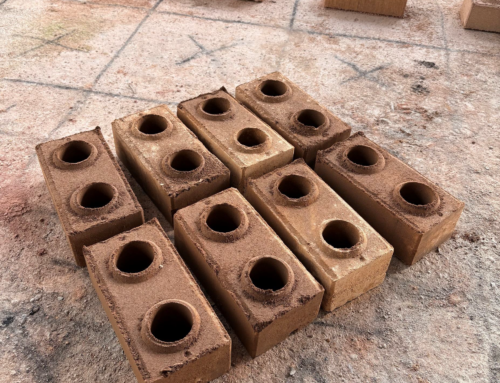
Following two decades of building homes for vulnerable communities in the Gicumbi district of Rwanda, this project aims to carry out an in-depth assessment of existing practices in order to help L’Appel further develop its thinking in the areas of construction techniques, adobe-making processes, finishes and comfort features.
Results
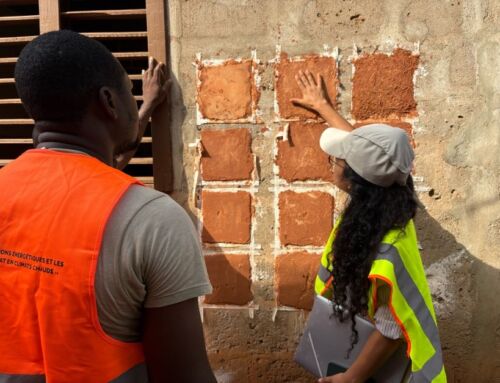
A field audit was carried out in collaboration with the beneficiary families in their own homes. The aim was twofold: to gain an understanding of the day-to-day reality of these households and to assess the extent to which the homes built by L’Appel meet their practical needs. Residents of twenty-six homes, spread across the sites of Byumba, Kiruhura and Muhura, were interviewed. Each visit provided an opportunity for direct dialogue with the families, enabling us to gather their feedback whilst carrying out a technical and social assessment of their homes. A detailed survey was carried out for each dwelling. The families also expressed their aspirations, which were often modest but essential.
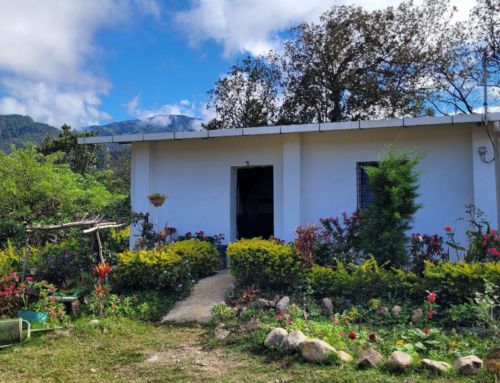
The houses built by the L’Appel association are fully in keeping with local building and architectural practices. They blend into the landscape, respect traditional construction methods and are situated on plots of land belonging to the beneficiary families. This approach, rooted in a detailed understanding of the physical and cultural context, reinforces the coherence between architecture, the environment and the ways in which the homes are used. The layout of the houses built by L’Appel follows a common typology of modest Rwandan housing. The architectural choices reflect a sound understanding of climatic and technical constraints.
Whilst this model meets the economic and climatic requirements of the Rwandan context, it also paves the way for improvements. Consideration of the gradual integration of essential features (such as a semi-covered kitchen) or the optimisation of extensions could enhance its adaptability. Striking a balance between structural simplicity, controlled costs and quality of life remains central to the challenges facing future developments in housing in the region.
Partners
UrbaSEN, Grdr, Padem, Lumanti, CADECOM, CARD
Financing
Fondation pour le Logement des Défavorisés