Context
AfriCAP 2016 is a three-year initiative funded by the European Union under the ACPCultures+ programme. AfriCAP 2016 aims to strengthen synergies and operational capacities amongst decision-makers and professionals in the field of cultural heritage in French-speaking Africa, with a view to consolidating the contribution of cultural heritage to development.
Africa possesses a rich cultural heritage, yet few initiatives are being undertaken to build development on this potential. By addressing the key question of what tools need to be developed to make better use of this heritage, the AfriCAP2016 programme focuses on:
- the management and promotion of immovable, movable and intangible heritage;
- capacity-building for project owners and project managers;
- networking amongst stakeholders.
AfriCAP2016 (2014-2016) focuses on 3 areas:
- Axis 1: Three projects demonstrating the contribution of heritage to development
- Axis 2: Strengthening the operational capacities of decision-makers and players in the field of cultural heritage
- Axis 3: Synergies and networking between cultural heritage decision-makers and professionals
Objectives
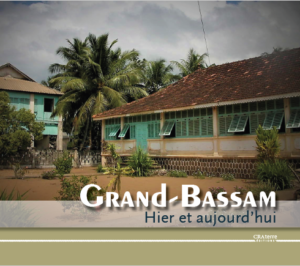
As the first capital of Côte d’Ivoire and once the economic heart of the French trading posts in the Gulf of Guinea, the historic town of Grand-Bassam has been inscribed on the World Heritage List since 2012. A remarkable example of a colonial town from the late 19th and early 20th centuries, it is now threatened by the deterioration of numerous abandoned or poorly maintained buildings and by certain modern alterations that are compromising its authenticity. The city of Grand-Bassam now wishes to strengthen its conservation measures to ensure better preservation and to disseminate these measures so that institutions and residents can carry out restoration work and new construction in accordance with the heritage standards required of a city inscribed on the World Heritage List.
Results
Axis 1: Project based in Grand Bassam, Côte d’Ivoire, on ‘the management of construction and renovation in a city inscribed on the World Heritage List’.
- A study of the factors affecting the urban landscape and the existing legal framework;
- A methodology for raising awareness of urban architectural regulations;
- An awareness-raising guide, printed in 80 copies;
- A leaflet presenting the heritage of Grand Bassam, printed in 600 copies.
Axis 2: Strengthening the operational capacities of decision-makers and stakeholders in the cultural heritage sector
- Two multi-stakeholder workshops, each bringing together 16 decision-makers (from Mali and Côte d’Ivoire). Participants were trained in the key stages of sound management of construction and restoration projects in historic towns;
- two training workshops bringing together 35 heritage stakeholders from Mali, Benin, Senegal and Côte d’Ivoire, who were trained in the key stages of sound management of construction and restoration projects in historic towns;
Axis 3: Networking among stakeholders
Stakeholder meetings and exchanges during the project have enabled the creation of synergies between the project’s target groups and beneficiaries. These synergies are reinforced by the launch of a website, which facilitates ongoing discussions, advice and the exchange of expertise.
Partners
AIMF, Ecole du Patrimoine Africain, Grands Ateliers and the communes of Nikki in Benin, Télimélé in Guinea Conakry and Grand Bassam in Côte d'Ivoire
Resources
For further information, download the presentation flyer